UK-wide bollard supply & installation
Bollard installation, done to the ground up
Security, automatic, removable, telescopic, traffic and warehouse bollards — supplied, installed, repaired and serviced for car parks, shops, offices, schools, warehouses and driveways.
- Free site survey and fixed, itemised written quote for installations
- Buried-service scan before every dig; foundations to the manufacturer's details
- Covering England, Wales, mainland Scotland and Northern Ireland

Computer-generated image · automatic rising bollards
Our approach
How we work
Surveyed, not guessed
We visit, measure approach angles and spacing, check the ground and confirm who owns it before quoting.
Scanned before digging
Utility records reviewed and dig positions scanned with cable-locating equipment on every installation.
Rated means as tested
Crash-rated products are installed to the manufacturer's tested foundation and spacing, or the rating doesn't apply.
Written prices
Fixed, itemised quotes for installs; repair and service visits priced in writing before we attend.
Shop by bollard type
Bollards we supply and install
Every type below is supplied and fitted by our crews, with foundations, reinstatement and keys handed over. Tap a type for specifications, typical prices and how it's installed.
Security & anti-ram
All security & anti-ram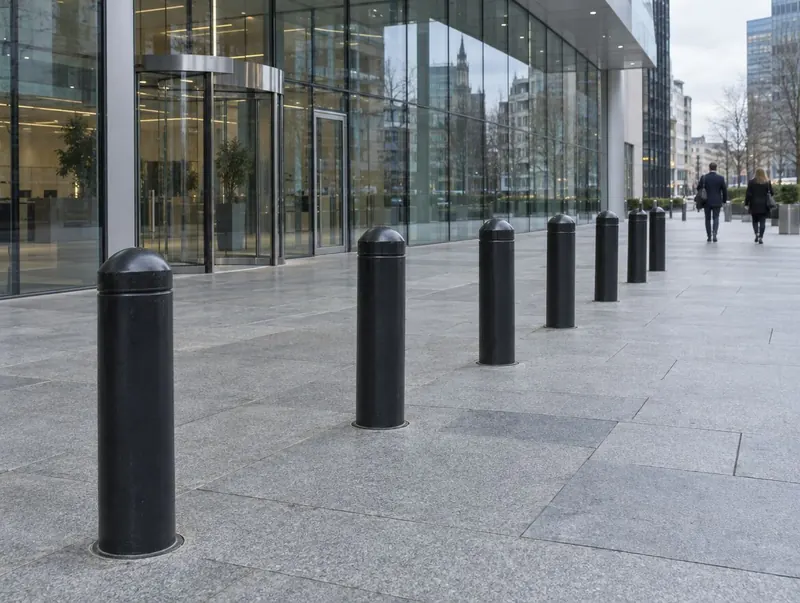
Crash-rated (HVM) bollards
Installation of impact-tested HVM bollards rated to ISO 22343-1 (or the superseded, still-accepted PAS 68 / IWA 14-1) on the tested foundation.
Learn more →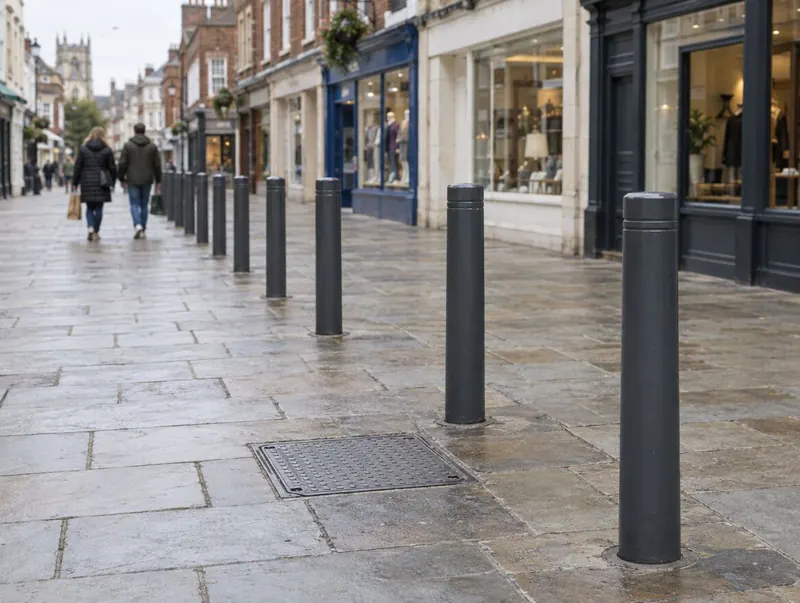
Shallow-mount security bollards
Rated shallow-foundation bollard systems installed where buried services, basements or slabs rule out deep excavation.
Learn more →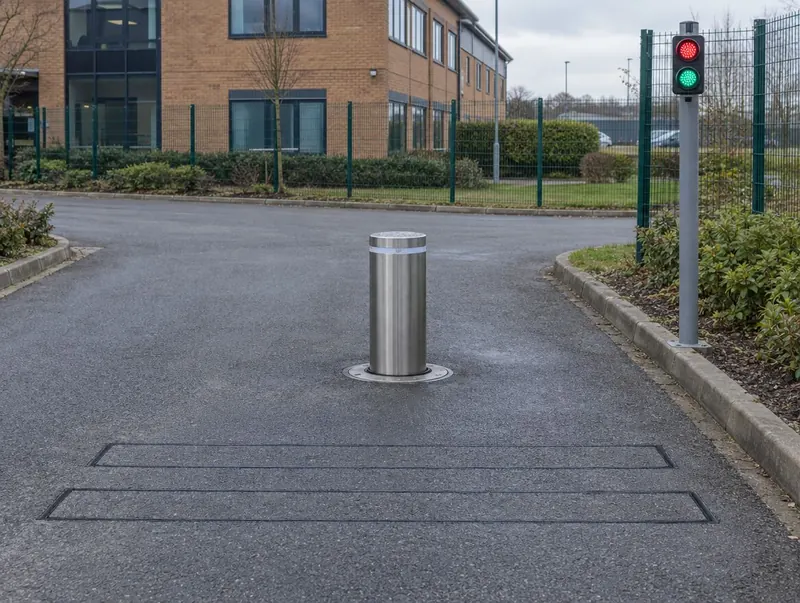
Automatic rising bollards
Hydraulic and electro-mechanical rising bollards installed with controls, safety loops, signals and power, for managed vehicle access.
Learn more →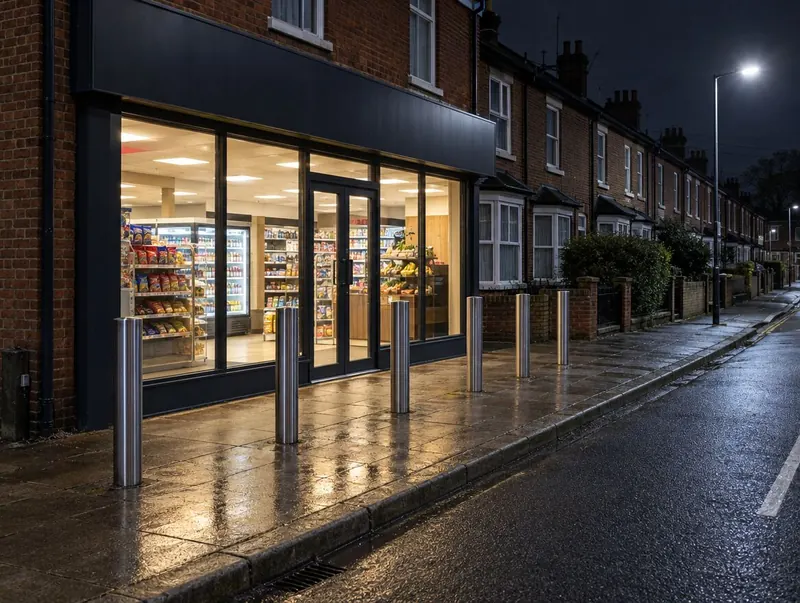
Ram-raid protection bollards
Bollards fitted in front of shopfronts, ATMs, jewellers and convenience stores to stop vehicles being used to break in.
Learn more →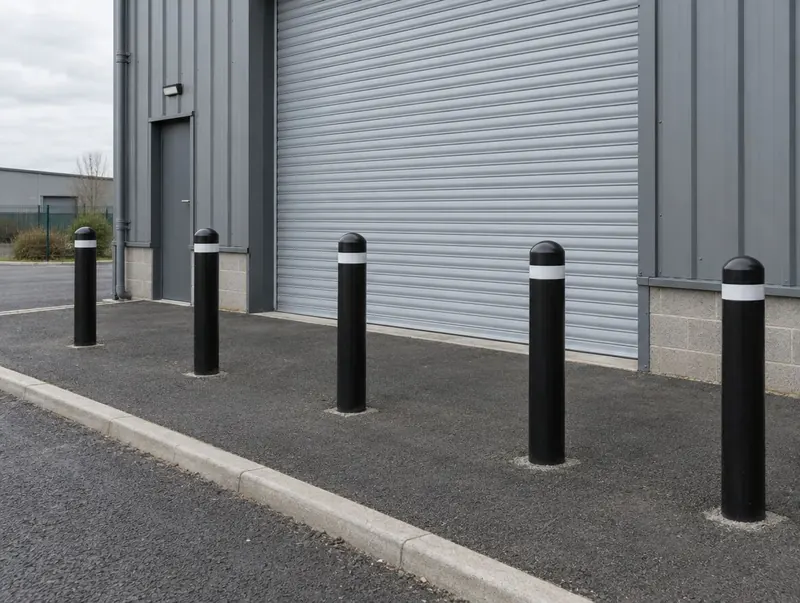
Steel security bollards (unrated)
Concrete-filled steel bollards, root-fixed or base-plated, for car parks, forecourts, boundaries and nuisance vehicle control.
Learn more →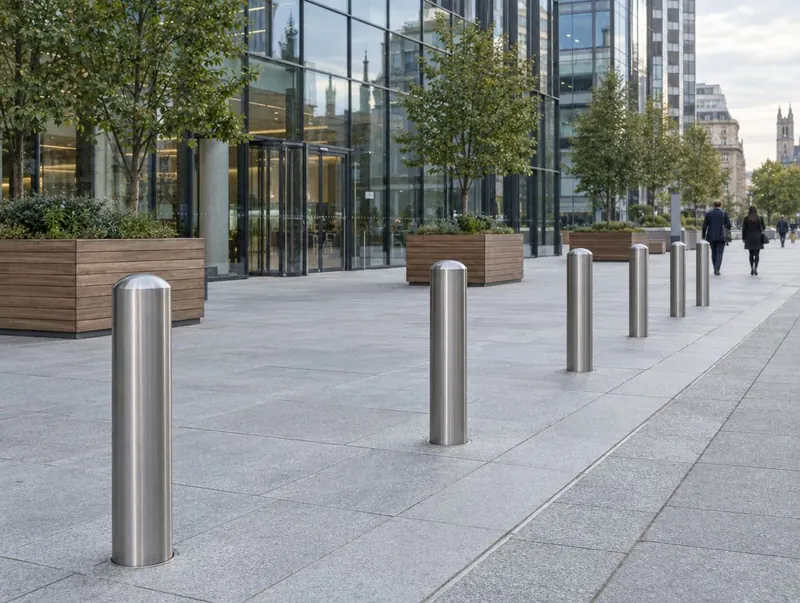
Stainless steel bollards and bollard covers
Stainless steel bollards and sleeve covers in 304 or 316 grade, for building entrances, plazas and upgrading tired steel posts.
Learn more →Access & parking control
All access & parking control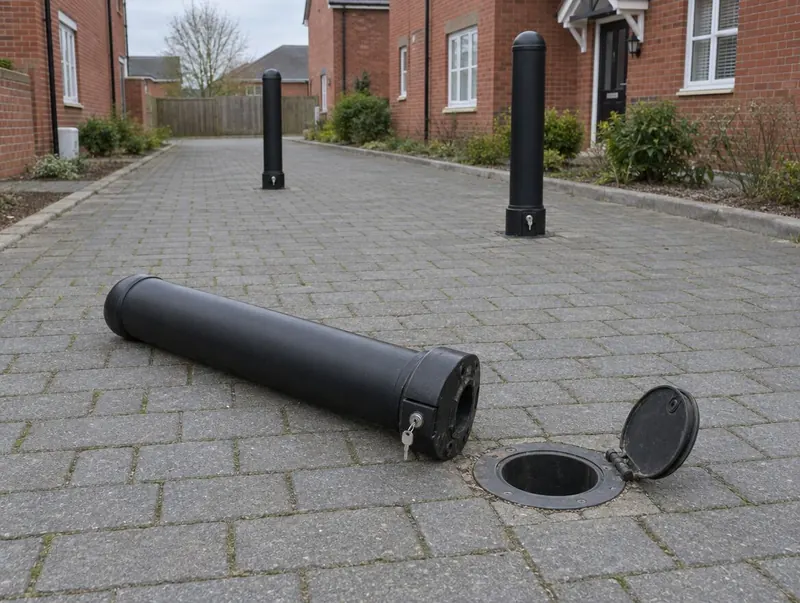
Removable bollards
Lift-out bollards in lockable ground sockets for driveways, delivery routes, access roads and emergency access points.
Learn more →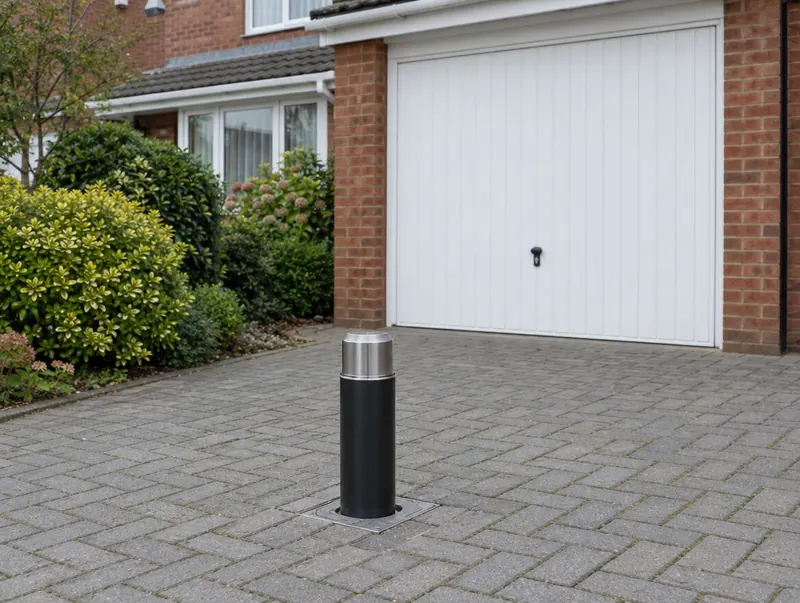
Telescopic bollards
Key-locked telescopic bollards that retract into a ground cassette, for driveways, private bays and access roads.
Learn more →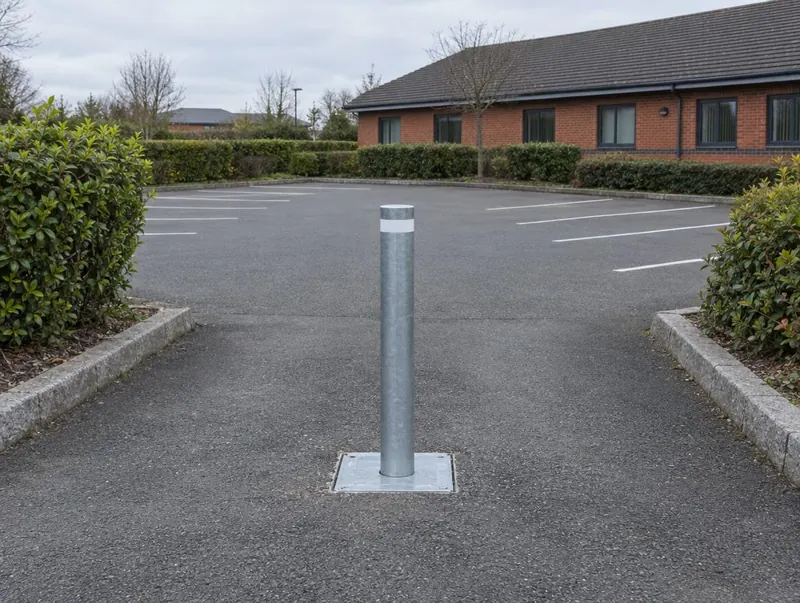
Semi-automatic bollards
Gas-strut assisted bollards that rise on their own when unlocked and lower by hand, with no mains power needed.
Learn more →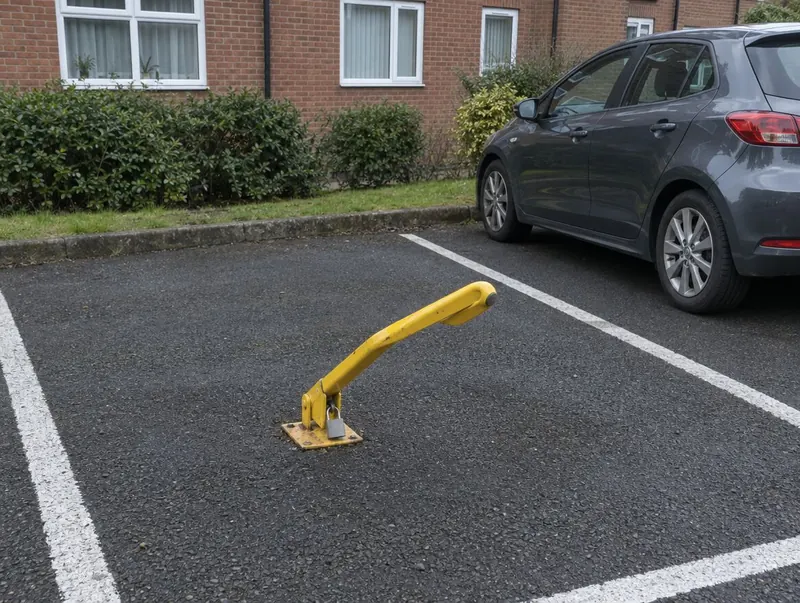
Fold-down parking posts
Hinged fold-down parking posts with padlock or integral key locks, bolted down to protect private and allocated bays.
Learn more →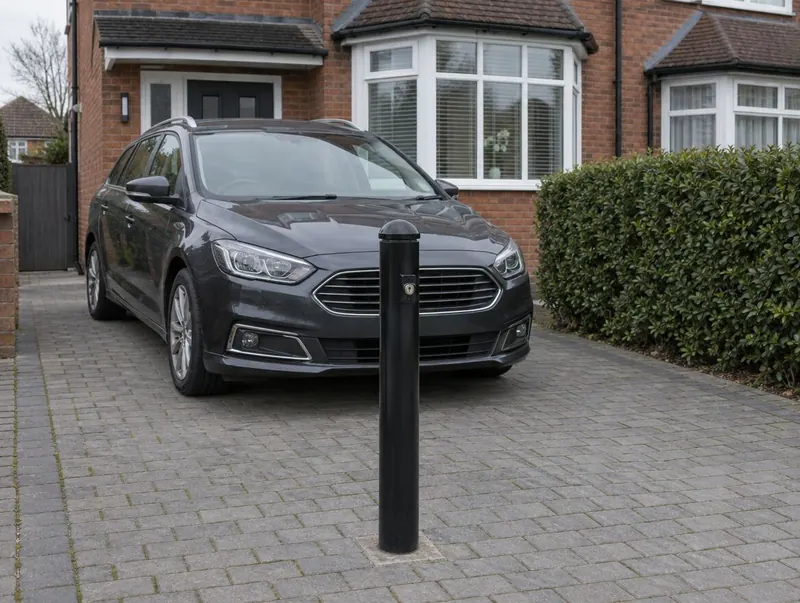
Driveway security posts
Telescopic, fold-down and removable security posts for home driveways, to deter car theft and stop unwanted parking.
Learn more →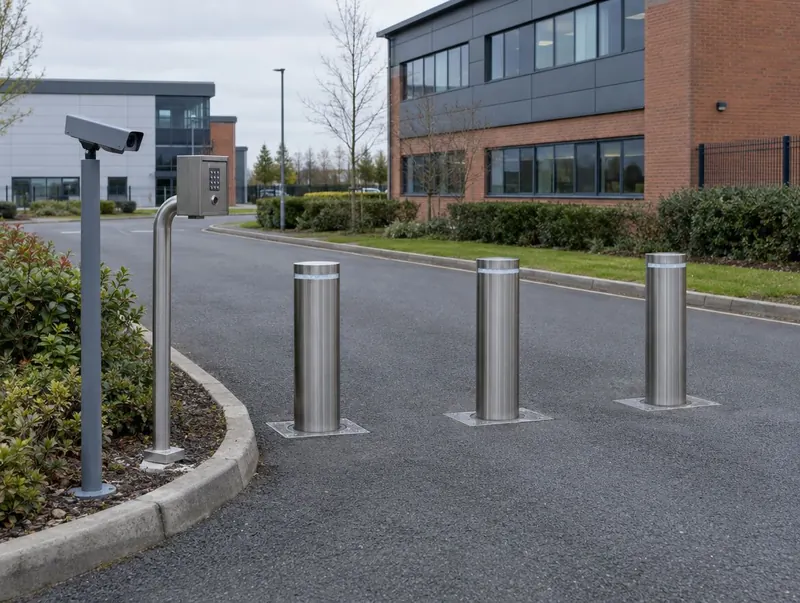
Bollard access control
ANPR, fob, keypad, intercom and remote control systems that decide who can lower an automatic bollard, and when.
Learn more →Traffic & site protection
All traffic & site protection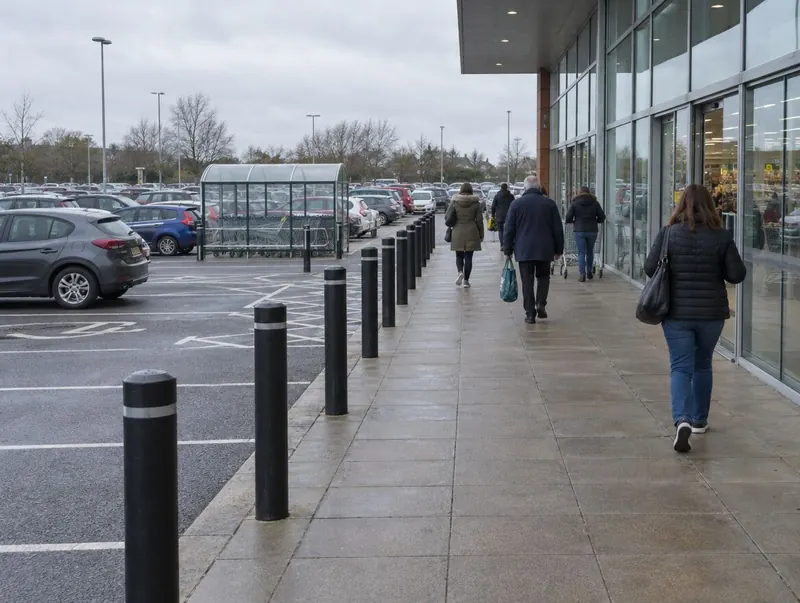
Pedestrian and shopfront protection bollards
Bollards that separate people from vehicles at car parks, forecourts, walkways, drive-thrus and shop entrances.
Learn more →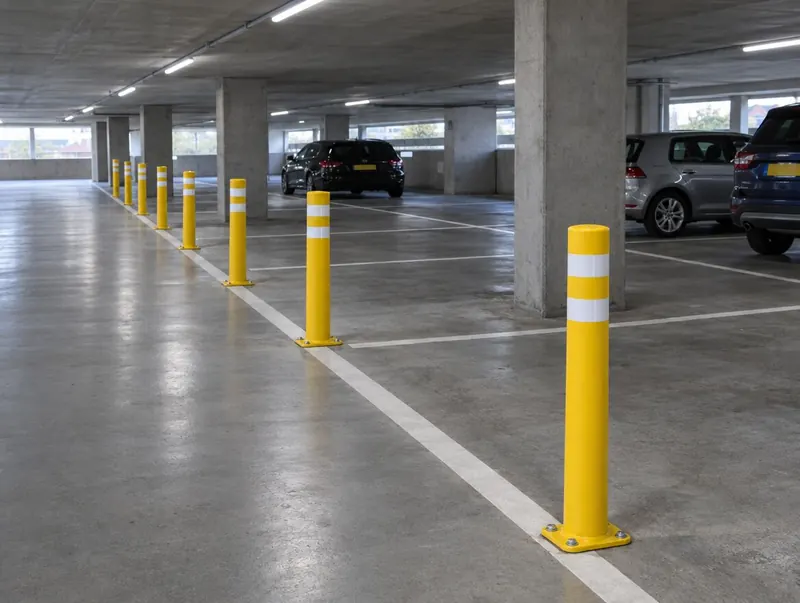
Flexible impact-recoverable bollards
Polyurethane and spring-based bollards that bend when hit and return upright, for car parks, depots and lane separation.
Learn more →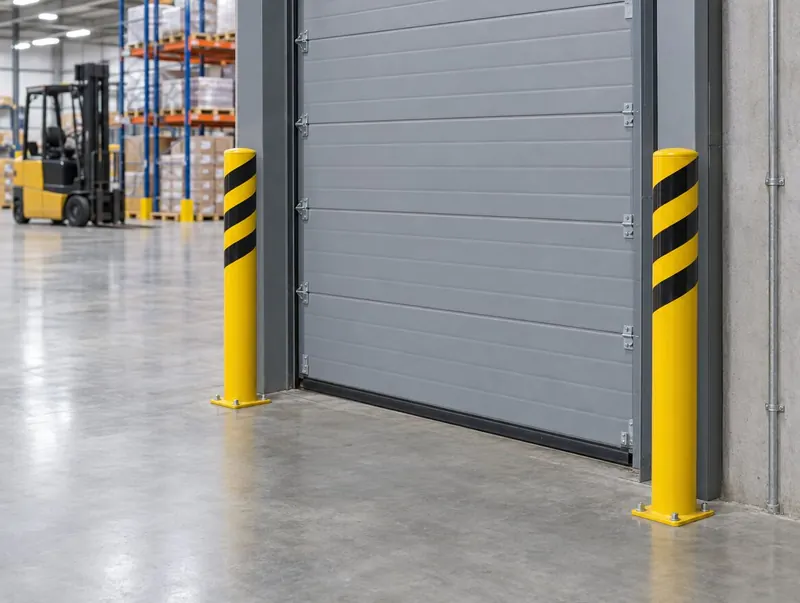
Warehouse and loading-bay impact bollards
Yellow steel and polymer impact bollards for forklift zones, loading bays, doors, columns and racking inside warehouses.
Learn more →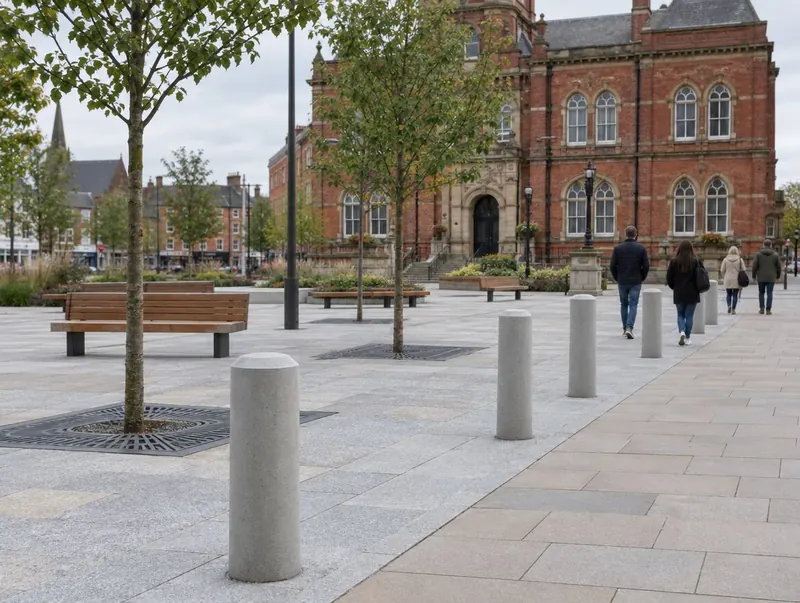
Concrete bollards
Precast concrete and reconstituted stone bollards for public realm, parks, boundaries and estates, dowelled or bedded in place.
Learn more →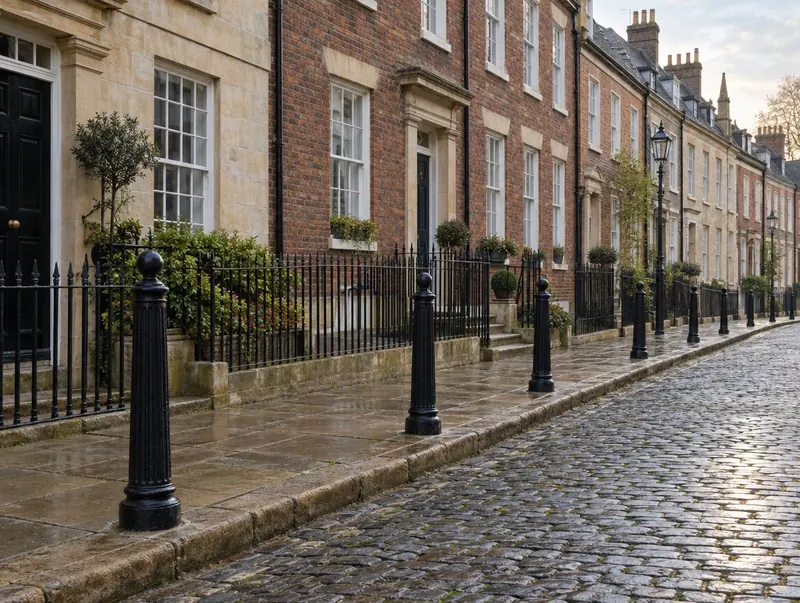
Cast iron and heritage bollards
Traditional cast and ductile iron bollards for conservation areas, period streets and historic estates, installed and reset.
Learn more →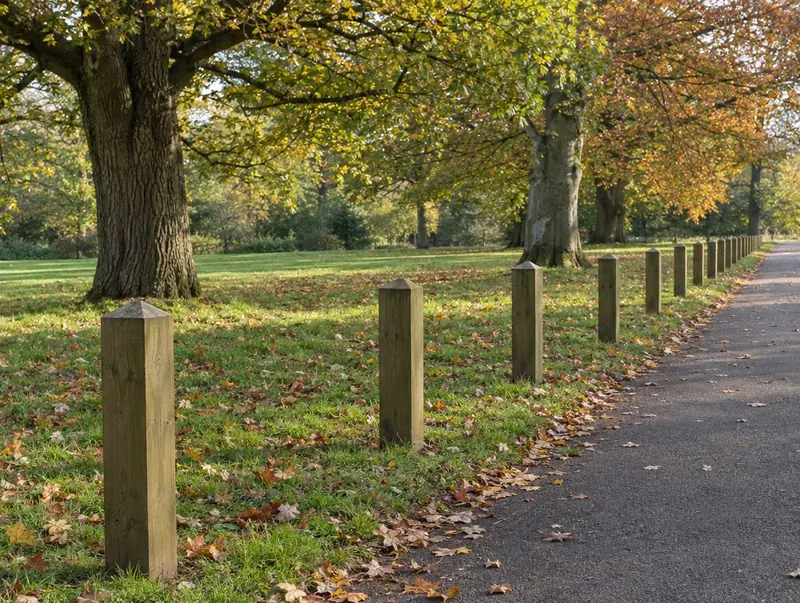
Timber bollards
Oak, hardwood and treated softwood bollards for parks, verges, rural sites, car parks and school frontages.
Learn more →
Lighting bollards
Low-level LED bollard lights for paths, car parks, entrances and gardens, installed with a qualified electrician.
Learn more →Repairs, servicing & removal
All repairs, servicing & removal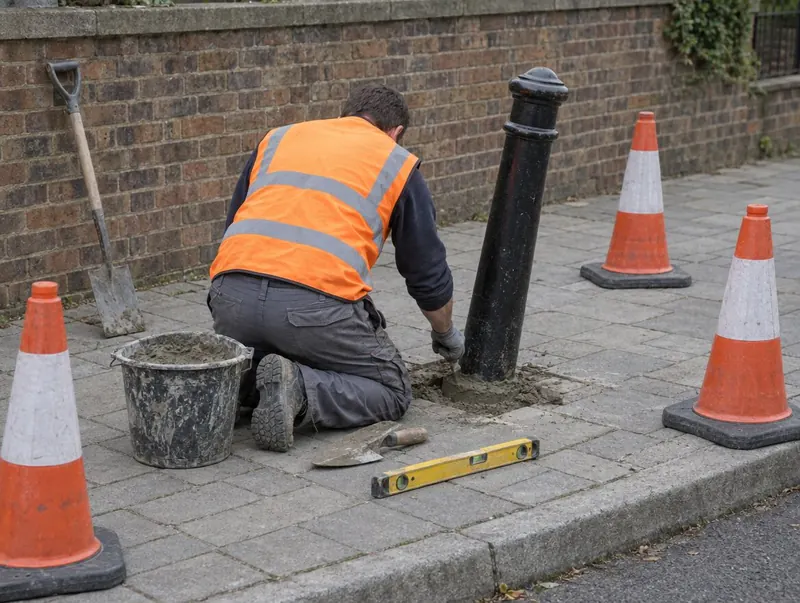
Bollard repairs
Paid repair visits for loose, leaning and damaged bollards: re-bedding, re-fixing, new sockets, locks, caps and reflective bands.
Learn more →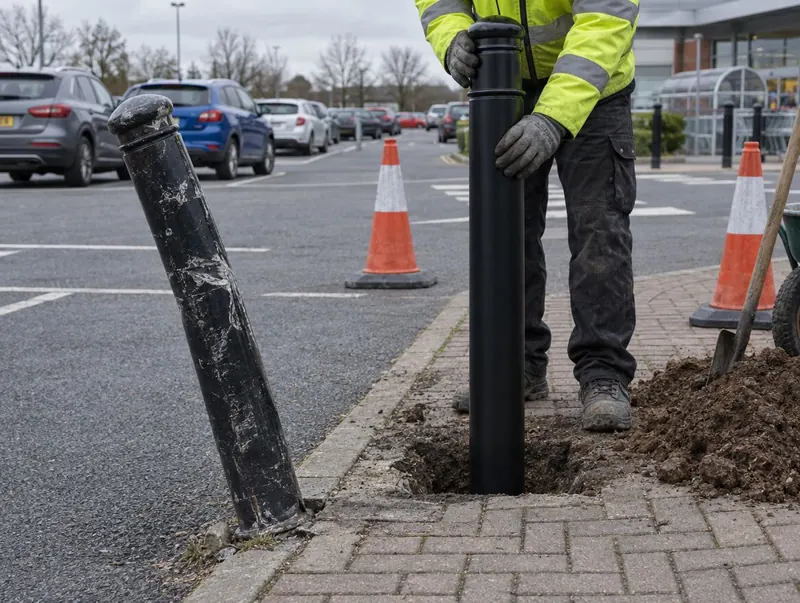
Bollard replacement
Like-for-like or upgraded replacement of bollards damaged by vehicles, corrosion or wear, matched to the existing line.
Learn more →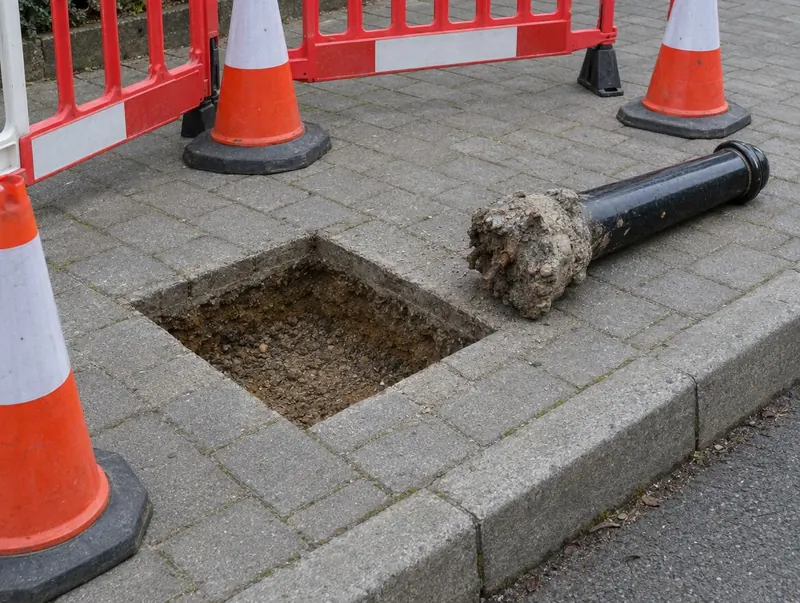
Bollard removal
Removal of fixed, removable, telescopic and automatic bollards, including foundations, with the surface made good to match.
Learn more →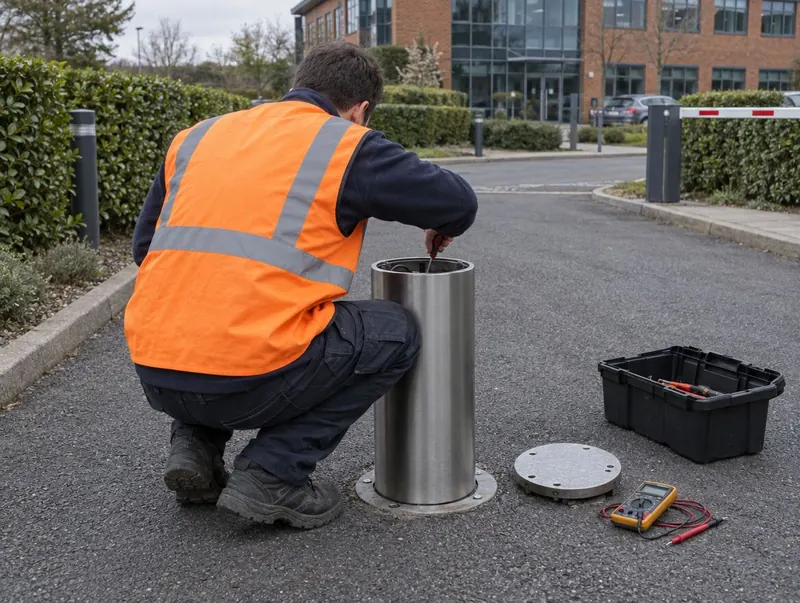
Automatic bollard servicing
Planned servicing visits and maintenance contracts for hydraulic and electro-mechanical rising bollards, priced in writing.
Learn more →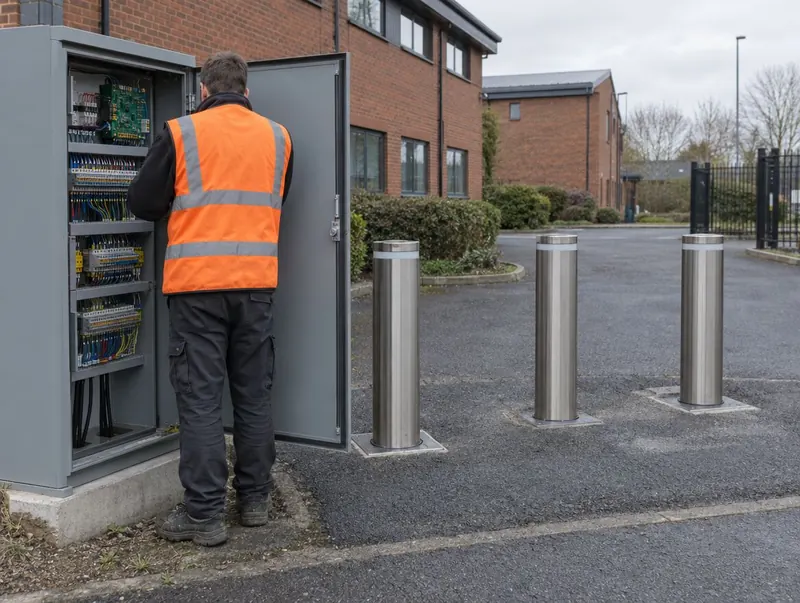
Automatic bollard repairs
Paid repair visits for rising bollards: hydraulics, motors, controllers, loops, flooded pits and heads damaged by vehicles.
Learn more →Spacing and visibility
How far apart should bollards be?
Where bollards are there to stop vehicles, the clear gap should be no more than 1.2 metres, measured 600 mm above the ground — narrow enough to stop a car, wide enough for wheelchairs and prams.
Government accessibility guidance also asks for posts at least 1,000 mm high with contrasting tops, and no chains between them. On cycle routes allow at least 1.5 m. Crash-rated systems only perform at the spacing they were tested at. We set out every line on site before digging, so you can walk it, drive it and adjust it.
Four steps
What happens next
Tell us about the site
Use the price calculator or the form: postcode, bollard type, roughly how many, and the ground surface.
Free survey
We visit, check ground and services, confirm land ownership and any consents, and agree spacing and finish.
Fixed written quote
Itemised: posts, foundations, reinstatement, extras and programme. No obligation.
Installation
Set out, scanned, excavated, set and reinstated; keys, manuals and photos handed over.
Sectors
Who we install for
Car parks
Protecting pay machines, walkways, barriers and EV chargers, and controlling who can use a bay or entrance.
Learn more →Retail and shopfronts
Ram-raid and vehicle protection for shopfronts, ATMs and cash points, plus forecourt and pavement protection.
Learn more →Offices and business parks
Entrance control, perimeter protection and smart, durable finishes for corporate sites and multi-let parks.
Learn more →Schools and colleges
Separating pupils from vehicles at gates, drop-off points and staff car parks, and controlling site access.
Learn more →Hospitals and healthcare
Protecting entrances, ambulance routes and pedestrian areas while keeping emergency access open.
Learn more →Warehouses and logistics
Impact protection for doors, columns, racking ends, docks and pedestrian walkways in forklift and HGV areas.
Learn more →Housing associations and estates
Controlling parking, protecting greens and footpaths, and replacing damaged posts across managed estates.
Learn more →Public realm and councils
Installation of specified street furniture, pedestrianisation and protective security schemes for councils and their contractors.
Learn more →Reviews
Reviews will appear here as jobs are completed
We only publish genuine reviews from customers whose bollards we have installed or serviced. If we have worked for you, we'd be grateful for an honest review on Google once our profile is live. Until then you'll see none here, rather than made-up ones.
FAQ
Bollard questions we're asked most
How much does bollard installation cost?
Most single fixed steel bollards cost around £195–£895 each supplied and installed (plus VAT), removable and telescopic posts roughly £245–£1,195, and automatic rising bollards from about £2,995 per bollard once controls, ducting and commissioning are included. Crash-rated systems cost more again. Ground, access and quantity make the biggest difference.
Is the site survey free?
Yes for installation work: we visit, measure, scan for buried services where needed and send a fixed, itemised written quote with no obligation. Repairs, servicing and automatic-bollard fault visits are paid visits, and we tell you the price in writing before we come.
Who carries out the work?
Installation crews working under our management. We survey, advise, quote, supervise and take responsibility for the job; the contract is with S&K Property Investments and Improvement Ltd, trading as Bollard Installers.
Do you cover my area?
We cover England, Wales, mainland Scotland and Northern Ireland. We don't currently cover the Scottish islands, the Isles of Scilly, the Isle of Man or the Channel Islands.
How long does installation take?
Simple fixed or removable posts usually take a few hours each, with concrete then left to cure. Automatic bollards take several days on site because of excavation, ducting, power and commissioning. We give a programme with the quote.
Do I need permission to install bollards?
On your own land, usually only the owner's or landlord's agreement, although planning rules don't clearly cover bollards, so listed buildings, conservation areas and prominent frontages are worth checking with the council. On a public footway or road you need the highway or roads authority's written consent (DfI Roads in Northern Ireland).
What is the difference between a security bollard and a crash-rated bollard?
Any strong steel post set in concrete is a security bollard. A crash-rated bollard has been impact-tested to a recognised standard, so its performance against a stated vehicle and speed is known — but only if installed exactly as tested.
How far apart should bollards be?
Where bollards are there to stop vehicles, government guidance sets the clear gap at no more than 1,200 mm, measured 600 mm above the ground — still wide enough for wheelchairs and prams. On cycle routes, allow at least 1.5 m. Crash-rated systems use the spacing they were tested at. We set out every line on site before digging.
Can you remove our old bollards?
Yes. We remove posts and their footings, dispose of them and reinstate the surface to match.
UK-wide
Areas we cover
Choose your county or council area for local towns, highway authorities and prices.
- Bedfordshire
- Berkshire
- Bristol
- Buckinghamshire
- Cambridgeshire
- Cheshire
- Cornwall
- County Durham
- Cumbria
- Derbyshire
- Devon
- Dorset
- East Riding of Yorkshire
- East Sussex
- Essex
- Gloucestershire
- Greater Manchester
- Hampshire
- Herefordshire
- Hertfordshire
- Isle of Wight
- Kent
- Lancashire
- Leicestershire
- Lincolnshire
- London
- Merseyside
- Norfolk
- North Yorkshire
- Northamptonshire
- Northumberland
- Nottinghamshire
- Oxfordshire
- Rutland
- Shropshire
- Somerset
- South Yorkshire
- Staffordshire
- Suffolk
- Surrey
- Tyne and Wear
- Warwickshire
- West Midlands
- West Sussex
- West Yorkshire
- Wiltshire
- Worcestershire
- Blaenau Gwent
- Bridgend
- Caerphilly
- Cardiff
- Carmarthenshire
- Ceredigion
- Conwy
- Denbighshire
- Flintshire
- Gwynedd
- Isle of Anglesey
- Merthyr Tydfil
- Monmouthshire
- Neath Port Talbot
- Newport
- Pembrokeshire
- Powys
- Rhondda Cynon Taf
- Swansea
- Torfaen
- Vale of Glamorgan
- Wrexham
- Aberdeen City
- Aberdeenshire
- Angus
- Argyll and Bute
- City of Edinburgh
- Clackmannanshire
- Dumfries and Galloway
- Dundee City
- East Ayrshire
- East Dunbartonshire
- East Lothian
- East Renfrewshire
- Falkirk
- Fife
- Glasgow City
- Highland
- Inverclyde
- Midlothian
- Moray
- North Ayrshire
- North Lanarkshire
- Perth and Kinross
- Renfrewshire
- Scottish Borders
- South Ayrshire
- South Lanarkshire
- Stirling
- West Dunbartonshire
- West Lothian
- Antrim and Newtownabbey
- Ards and North Down
- Armagh City, Banbridge and Craigavon
- Belfast
- Causeway Coast and Glens
- Derry City and Strabane
- Fermanagh and Omagh
- Lisburn and Castlereagh
- Mid Ulster
- Mid and East Antrim
- Newry, Mourne and Down